Solar is easy to sell and hard to keep running.
We install across Texas, and we are the ones who come back to service it. Same company, twenty-five years, one phone number.
Output, kW
- Serviced
- 17,380 kWh a year
- Year eight, unserviced
- 15,030 kWh a year
The shaded gap is 2,350 kWh a year — 13.5% of what the roof should be making, about $330 at 14¢. Soiling, one dead optimizer, and a live oak nobody trimmed. None of it shows up as a fault. That gap is what a maintenance plan is.
Texas is a good place for solar and a hard place for panels.
The sun is not the problem. Central Texas gets around five peak sun hours a day, which is why an 8.4 kW array here makes about 12,300 kWh a year — enough to cover most of a normal house. The problem is everything else the climate does to hardware.
Cedar pollen in February. Caliche dust every dry spell. Roof surface temperatures over 160°F, which is where inverters start derating to protect themselves. Hail in the spring. And a grid that has twice in living memory stopped being something you can assume.
All of that is manageable. None of it manages itself. An array here needs someone looking at it, which is not what most of this industry sells.
Three systems, and the honest price of each.
Full specificationsHomestead
8.4 kW
The common answer for a Texas house with a clear south or west roof plane and no battery in the budget yet.
- Installed price
- $18,900 – $24,500
- Produces
- About 12,300 kWh a year in Central Texas
Ride-Through
12.6 kW + 13.5 kWh
Built for the week the grid is the problem. Runs the essentials — fridge, well pump, a window unit, the router — with the meter at zero.
- Installed price
- $34,000 – $44,000
- Produces
- About 18,400 kWh a year in Central Texas
Section
40 kW and up
Commercial and agricultural. Barn roofs, warehouse decks, ballasted flat roofs, and ground mount where the roof will not take it.
- Installed price
- Quoted per site
- Produces
- Modelled against 12 months of your interval data, not a rule of thumb
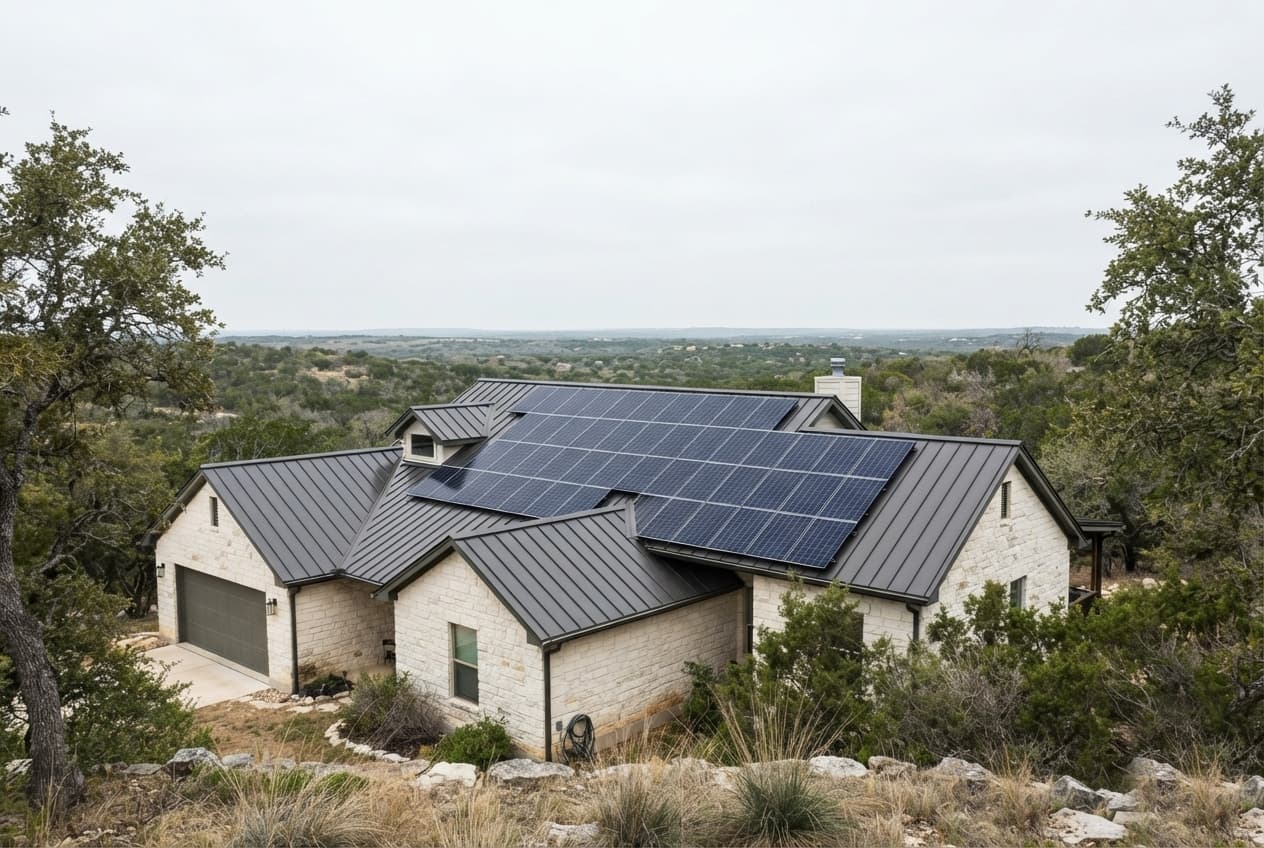
A Homestead install on standing seam outside Dripping Springs. Clamped to the seam, so there are no penetrations in the roof at all.
12,412 kWh in year one, 101% of model
What we come back for.
An install takes two days. Everything that decides whether the system was worth buying happens in the twenty-four years after that.
Year 1
Production baseline set. Panel-level output logged in your first full summer, so every reading after this one has something honest to be measured against.
Year 2
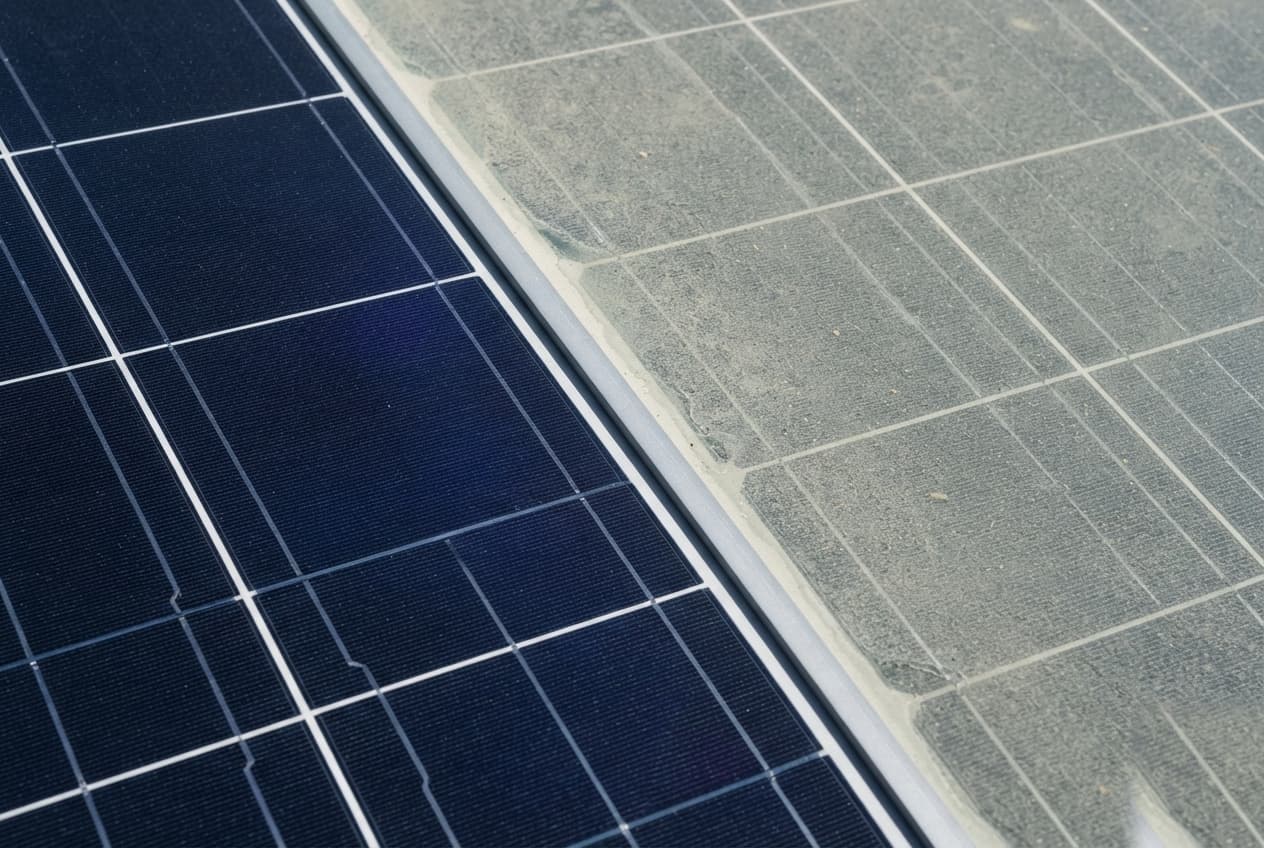
First wash. Texas dust, cedar pollen and the film left by hard water take four to seven percent off output before anything looks wrong on your app.
Year 6
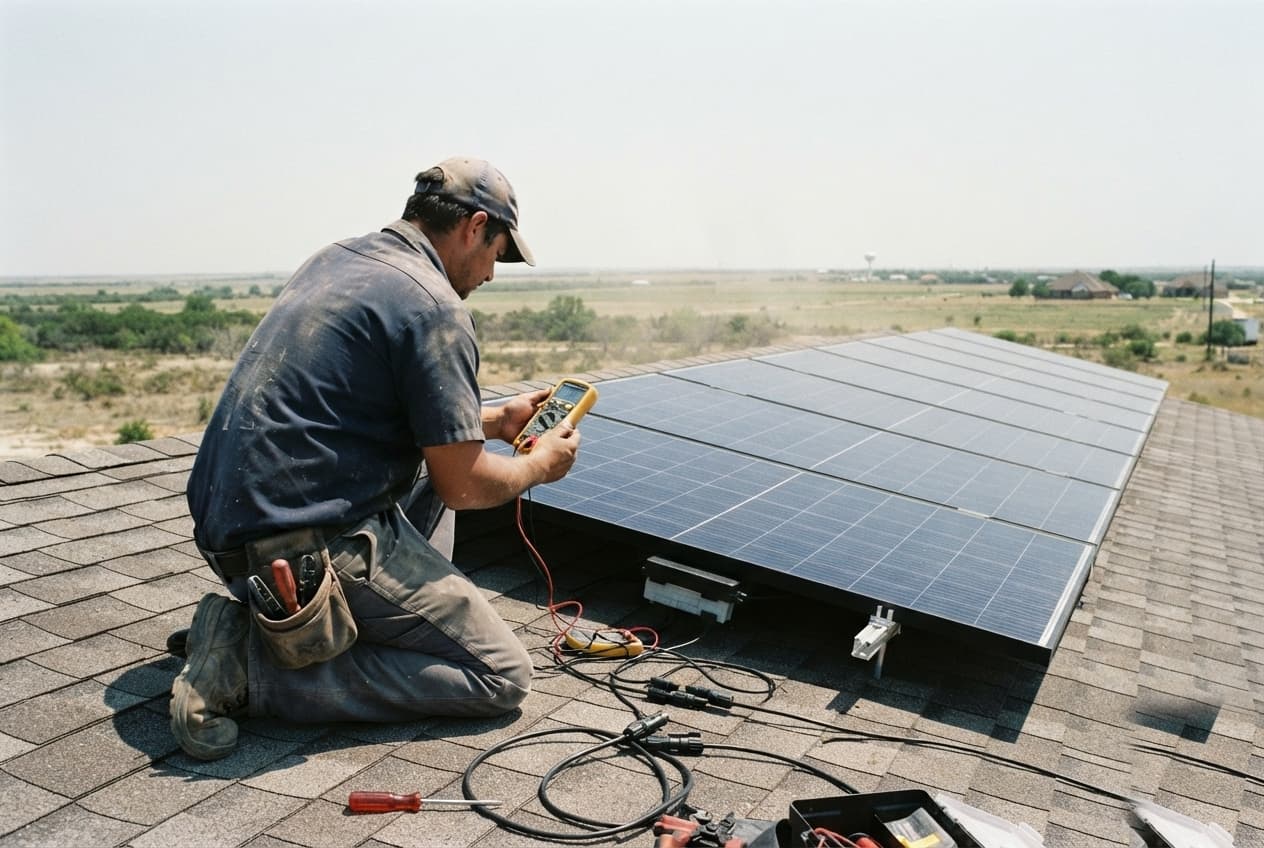
Optimizer and connector check. This is where unserviced systems begin losing one panel at a time, and where the loss is small enough that nobody notices for years.
Year 12
Inverter replacement, covered by the Full Service plan. It is the single largest bill a solar owner does not see coming, and it arrives long after the salesperson has moved on.
Year 25
Panels still inside their production warranty, and we are still the phone number on the sticker inside your breaker box.
From $14 a month, on systems we installed and systems we did not.
Why any of that is worth believing.
- 92%
Production guarantee
If a maintained system misses 92% of its modelled first year, we pay the difference in kilowatt-hours or in cash.
- 1,240
Systems under service
Including several hundred we did not install, taken over from companies that closed.
- 41 hrs
Median fault response
Measured from the monitoring alert, not from your phone call. Most faults we find first.
- 25 yrs
Workmanship warranty
Backed by TECL 39117 and a business that has been trading since 2011.
Our first installer stopped answering the phone in 2019. Lonestar took over a system they did not sell, found two optimizers that had been dead for a year and a half, and got production back where it should have been. That is when I understood what I had actually been paying for the first time.
Dale Whitmore
Dripping Springs. Took over an orphaned 9.2 kW system.
We lost the cold room for eleven hours in the freeze and it cost us more than the panels did. The battery went in that spring. Last August the block went dark twice and I found out from the neighbours.
Rosa Villarreal
New Braunfels. Ride-Through, 12.6 kW with storage.
They quoted the roof replacement first and told us to call them back in six weeks. Every other company that walked the property was happy to build straight on top of a roof with four years left in it.
Kenneth Aduba
Pflugerville. Homestead, 8.4 kW.
Houses, and everything bigger than a house.
Homes
We read your last twelve months of usage before we quote anything, so the number you get is modelled against how your household actually uses power — not a rule of thumb applied to your roof area. Assessment takes about forty minutes and you keep the figures whether you buy or not.
Businesses and ag operations
Barn roofs, warehouse decks, cold storage, ground mount where the roof will not take the load. We model against your interval data, schedule roof work around your operating hours, and coordinate with whoever holds your roofing warranty before anyone drills anything.
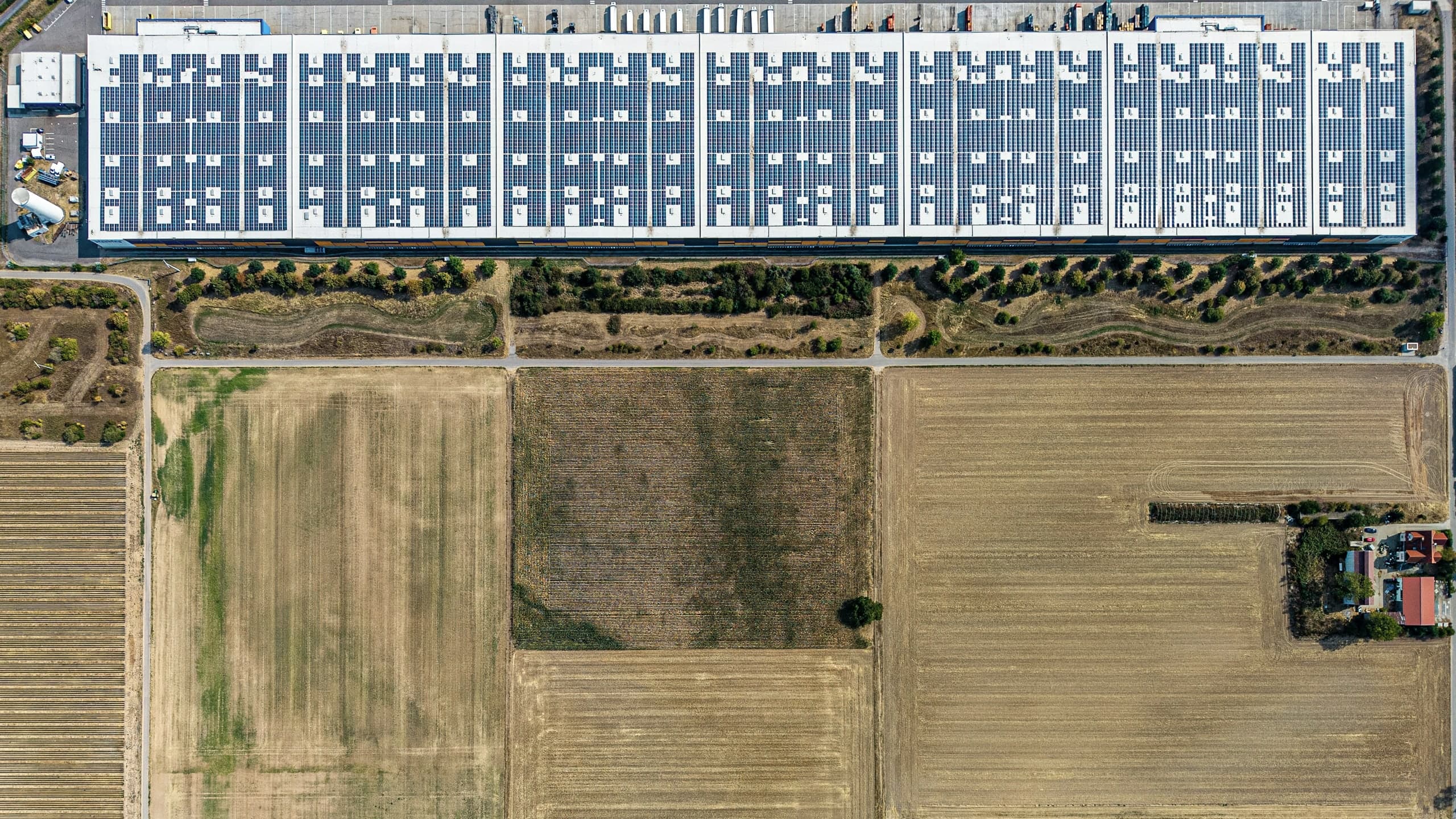
Roofs at this scale are rail-clamped rather than drilled, and sized against twelve months of interval data instead of roof area.
Section tier, 40 kW and up
The money, said plainly.
Texas does not have net metering.
There is no state rule making anyone buy your surplus. What you get depends entirely on your retail provider’s buyback plan, and those plans differ by a lot. We check which ones are actually available at your address and show you the difference in dollars before you sign anything.
Your property tax does not go up.
Texas Tax Code §11.27 exempts the added value of a solar system from property tax. The system raises what your house is worth without raising what you are assessed on. You do have to file for it, and we give you the form.
We will not quote you a federal credit on a website.
The federal picture changed in 2025 and it is no longer the same for homes as it is for businesses. You will still find a cheerful 30% on plenty of Texas solar sites. We tell you what you qualify for at the assessment, in writing, with the current rule cited — and if the answer is nothing, we say so before you spend money, not after.
Local utility rebates through Austin Energy, CPS Energy and some co-ops open and close through the year. We check availability at your address on the day we assess it.
What people ask before they sign.
Book a solar assessment.
Forty minutes at your address. We read twelve months of your usage, get on the roof, check the service panel, and leave you a modelled production figure in writing.
It costs nothing and there is no obligation attached to it. If solar is wrong for your roof we will tell you that on the day, which happens more often than the rest of this industry admits.